
WELCOME BONUS 300%
UP TO €2000 + 100
FREE SPINS
UP TO €2000 + 100
FREE SPINS
Home → Roulette
Roulette at Duel-Casino
Even Chances 1:1 on 18 Numbers
French Roulette with La Partage offers an RTP of 98.65% on even chance bets like Red/Black or Odd/Even, a notable improvement. This variant's key rule is that half of the stake is returned when the ball lands on zero, reducing the house advantage. These bets pay 1:1, meaning a €10 bet returns €10 profit if successful.
In contrast, European Roulette, with a single zero and 37 sectors, presents a standard RTP of 97.30% across all bets. Without specific rules like La Partage, the house edge remains constant at 2.70% for all wager types. This means even simplified bets on Red/Black still carry this inherent disadvantage.
The French Roulette variant, when La Partage is applied exclusively to even chance bets, ensures that the house edge is cut by half on those specific wagers. This benefit, directly impacting bets such as Red/Black, Odd/Even, and Low/High, significantly lowers the casino's advantage compared to standard European Roulette, where these bets carry the full 2.70% edge.
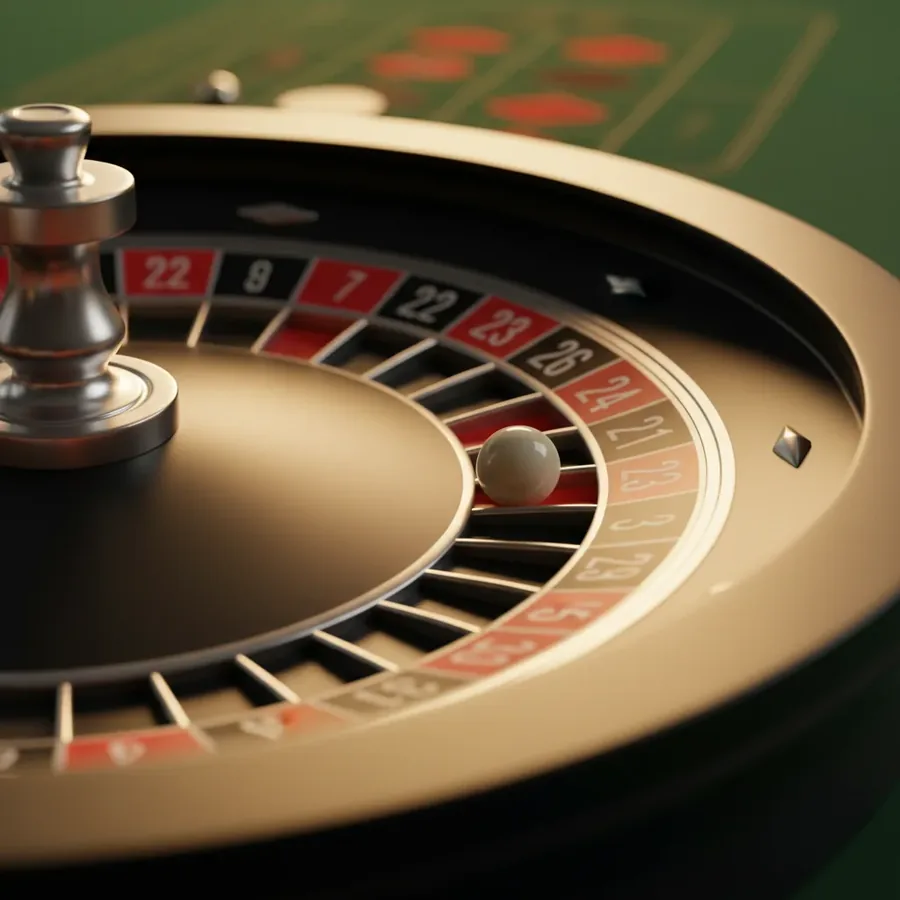
Why the Ball Has No Memory
Roulette wheels operate on independent probabilities, meaning previous outcomes do not influence future results, a fundamental principle for beginners to grasp. Each spin of the wheel in European Roulette, with its 37 sectors including a single zero, is a fresh event. This statistical independence is crucial for understanding the game's nature.
The house edge is a fixed percentage based on the wheel's design, not on the sequence of past wins or losses. For instance, American Roulette, featuring both a zero and a double zero across 38 sectors, has a higher house edge of 5.26%. This edge exists regardless of whether red or black has landed many times consecutively.
Understanding this concept prevents common misconceptions, such as believing a certain number is 'due' to land after a long absence. The payout structure, like the 35:1 for a straight bet on any roulette wheel, remains consistent, reflecting the probabilities of the specific wheel type being played.
House Edge: What 2.70 Percent Actually Costs
A 2.70% house edge on European Roulette means that, theoretically, for every €100 wagered over an extended period, the casino expects to retain €2.70. This figure is derived from the payout structure and the presence of 37 sectors, including a single zero. It applies uniformly to all bets, from single numbers to even chances.
To illustrate, consider wagering €10 on Red in European Roulette, which pays 1:1. If Red wins, you receive your stake back plus an equal amount. However, if Zero lands, you lose your stake, contributing to the casino's 2.70% advantage. This is consistent across all bets on the European wheel.
French Roulette with the La Partage rule modifies this cost for even chance bets, reducing the house edge to 1.35% by refunding half the stake on zero. This directly lowers the expected loss for players focusing on these specific bet types compared to the standard 2.70% edge found on European Roulette.
European or American: Which Wheel Pays Better
European Roulette, featuring 37 sectors and a single zero, offers a significantly lower house edge of 2.70% compared to its American counterpart. This means that for every €100 wagered, the casino's theoretical profit is €2.70, making it a more favorable option for players in the long run. All standard bets on this wheel have this edge.
American Roulette, with its additional double zero sector (making 38 in total), presents a steeper house edge of 5.26%. This doubled disadvantage is evident across all bets, including the standard payouts for straight-up bets at 35:1. The presence of '00' is the sole difference impacting the odds.
The 'Five Number Bet' in American Roulette, covering 0, 00, 1, 2, and 3, is particularly disadvantageous with a house edge of 7.89%. This single wager carries a higher edge than any bet on the European wheel, highlighting the importance of choosing the correct roulette variant for better player odds.
2.70 vs 5.26 Percent House Edge
The distinction between a 2.70% house edge on European Roulette and 5.26% on American Roulette directly translates to player profitability over time. The European wheel, with its single zero and 37 sectors, offers a lower inherent advantage to the casino. This means, theoretically, players retain more of their wagers.
In American Roulette, the inclusion of the double zero ('00') increases the number of possible outcomes to 38, while payout odds often remain similar to European wheels. This disparity means that bets like Red/Black, paying 1:1, have a 5.26% house edge, compared to 2.70% on the European version.
Consider the impact on a €10 bet; on a European wheel with a 2.70% edge, the theoretical retention by the house is €0.27. On an American wheel with a 5.26% edge, this theoretical retention rises to €0.53 for the same €10 bet, demonstrating the significant financial difference between the two roulette variants.
Roulette bet types at a glance
| Bet | Payout | Win Chance | Numbers Covered | House Edge |
|---|---|---|---|---|
| Roulette Europäisch (einfache Null, 37 Sektoren) | Straight 35:1, Split 17:1, Street 11:1, Corner 8:1, Six Line 5:1, Dozen 2:1, Column 2:1, Rot/Schwarz 1:1, Odd/Even 1:1, 1-18/19-36 1:1 | 97.30% | 37 Sektoren (1–36 + 0); Auszahlungen wie für 36 Sektoren – daher konstanter Edge auf ALLE Wetten | 2.70% |
| Roulette Amerikanisch (doppelte Null, 38 Sektoren) | Straight 35:1, Split 17:1, Street 11:1, Corner 8:1, Six Line 5:1, Dozen 2:1, Column 2:1, Rot/Schwarz 1:1 | 94.74% | 38 Sektoren (1–36 + 0 + 00); Auszahlungen wie beim europäischen Rad, aber der zusätzliche Sektor verdoppelt den Hausvorteil | 5.26% |
| Roulette Französisch, innere Einsätze (La Partage gilt nicht) | Straight 35:1, Split 17:1, Street 11:1, Corner 8:1, Six Line 5:1, Dozen 2:1, Column 2:1 | 97.30% | Rad gleich (37 Sektoren), aber La Partage/En Prison gilt nicht für innere Einsätze – Edge bleibt europäisch | 2.70% |
| Roulette Amerikanisch – Five Number Bet (0, 00, 1, 2, 3) | Five Number 6:1 (deckt 5 von 38 Sektoren) | 92.11% | Einzige Wette am amerikanischen Rad mit Edge über 5,26% – „Fallenwette“. Kein Äquivalent am europäischen Rad | 7.89% |
| Roulette Französisch mit La Partage (gerade Chancen) | Rot/Schwarz 1:1 (bei 0 Rückerstattung 50%), Odd/Even 1:1, Low/High 1:1; Innere Einsätze ohne La Partage: Straight 35:1, Split 17:1, Street 11:1, Corner 8:1 | 98.65% | Bei 0 wird die Hälfte des Einsatzes auf gerade Chancen zurückerstattet (Rot/Schwarz, Pair/Impair, Manque/Passe). En Prison gibt denselben 1,35%. Regel gilt NUR für gleiche Einsätze | 1.35% |
Error: Expecting La Partage at the Wrong Table
French Roulette with La Partage offers an improved house edge of 1.35% on even money bets, where half the stake is returned if the ball lands on zero. This rule significantly benefits players by reducing the house's advantage on bets like Red/Black or Odd/Even. However, this advantageous rule does not extend to inside bets, maintaining the standard European edge for those wagers.
In contrast, French Roulette without La Partage for inside bets still operates with a 2.70% house edge, identical to standard European Roulette. The RTP remains at 97.30%, but the absence of La Partage means no stake is returned on zero for inside bets. This distinction is crucial for players aiming to optimize their returns by understanding specific game rules.
Players should be aware that American Roulette, with its 5.26% house edge, does not feature La Partage at all. This variant presents a considerably higher house advantage compared to any French Roulette option, making it less favourable for strategic play focused on minimizing losses. The presence of both '0' and '00' sectors contributes to this elevated edge.
100 Euro Bankroll: 100 Rounds Simple Chances
With a 100 Euro bankroll, a player betting 1 Euro per round on simple chances in European Roulette could theoretically complete 100 rounds. European Roulette features a house edge of 2.70% and an RTP of 97.30%. This scenario assumes consistent betting without any significant wins or losses impacting the bankroll prematurely.
If opting for French Roulette with La Partage on even money bets, the house edge drops to 1.35%, meaning theoretically more rounds could be played with the same 100 Euro bankroll. This specific rule, where half the stake is returned on zero for even money bets, directly impacts the longevity of play compared to standard European Roulette.
American Roulette, with its higher house edge of 5.26%, would deplete a 100 Euro bankroll faster if betting 1 Euro per round on simple chances. The presence of the '00' sector creates a greater disadvantage for the player, making it less probable to achieve 100 rounds of play compared to European or French variants.
Mistake: Choosing American Wheel with 5.26 Percent
Selecting American Roulette, which features a house edge of 5.26%, presents a disadvantageous situation for players compared to European or French variants. This increased edge stems from the inclusion of both '0' and '00' sectors on the wheel, which are absent in other versions. For instance, a straight-up bet pays 35:1 on both types of wheels.
The difference in house edge is substantial; European Roulette maintains a 2.70% edge, while French Roulette with La Partage on even money bets can reduce this to 1.35%. Choosing American Roulette means accepting a nearly double disadvantage compared to European Roulette, and nearly four times the disadvantage of optimal French Roulette play.
This elevated house edge directly translates to a lower theoretical return to player (RTP). While European and French wheels offer an RTP of 97.30% (or 98.65% with La Partage), American Roulette's RTP is 94.74%. This means for every 100 Euros wagered, players can expect to lose more on the American wheel over the long term.
Payout Table from 35:1 to 1:1
The standard payout for a straight-up bet on a single number across most roulette variants, including European and American Roulette, is 35:1. This means a winning 1 Euro bet returns 36 Euros (the original stake plus 35 Euros in winnings). This payout remains consistent regardless of the wheel type, though the house edge varies.
Lower payouts are offered for combination bets, such as a split bet (two adjacent numbers) paying 17:1, and a street bet (three numbers in a row) paying 11:1. For bets covering larger groups of numbers, like dozens or columns, the payout is typically 2:1. These payouts are designed to reflect the decreasing probability of winning.
The lowest payout ratio is 1:1, commonly applied to even money bets like Red/Black, Odd/Even, or High/Low. These bets cover nearly half of the numbers on the wheel, offering the highest probability of winning, albeit with the smallest return. In French Roulette with La Partage, this payout is further modified on zero for even money bets.
Too High a Bet for a 50 EUR Bankroll
Placing a bet of 50 Euros on a single spin with a 50 Euro bankroll leaves no room for error or subsequent bets. This approach is highly risky, as a single loss would deplete the entire bankroll immediately, ending the gaming session. Such a bet size is not advisable for any player, especially beginners.
For a 50 Euro bankroll, a more prudent betting strategy would involve significantly smaller wagers, perhaps around 1 Euro per spin. This allows for a greater number of rounds, increasing the potential for experiencing the game and potentially encountering winning streaks, while also mitigating the risk of rapid depletion.
Even with smaller bets, the house edge remains a factor. For example, on European Roulette with a 2.70% house edge, betting 1 Euro per spin means the theoretical loss after 100 spins would be approximately 2.70 Euros. This illustrates how consistent smaller bets are more sustainable than large, high-risk wagers.
Betting Window Missed: What Happens to the Chip
When a player misses the betting window on American Roulette, the chip remains in play for the next spin, impacting the game's 5.26% house edge. This variant features 38 sectors, including both 0 and 00, which contribute to its higher house advantage compared to other roulette types. Straight bets in this version still offer a 35:1 payout, but the extended play can affect player outcomes.
In contrast, European Roulette, with its single 0 and 37 sectors, presents a house edge of 2.70%. If a bet is missed on this variant, the chip similarly remains for the subsequent round, maintaining the established payout structures like the 35:1 for a straight bet. The difference in house edge between the two is a critical factor for players.
French Roulette, especially with the La Partage rule applied to even-money bets, further alters the player's potential outcome. If a 0 is rolled and the La Partage rule is active, half of the bet on even chances is returned, significantly reducing the effective house edge on those specific wagers to 1.35%. This contrasts with the standard 2.70% edge on European Roulette.
Wheel Speed and Ball Toss in Real Wheel
Live Auto Roulette Classic 1 from Authentic Gaming features an automatic wheel with 37 sectors, maintaining the standard European Roulette RTP of 97.30%. This automated process ensures a consistent ball toss and wheel speed for every spin, eliminating human variability. The maximum payout for a straight bet remains 35:1, consistent with land-based European roulette.
Quantum Roulette by Playtech introduces a dynamic element with its quantum multipliers, which can reach up to 500x the bet. While the base RTP is often cited around 97.30% for the European wheel format it employs, these multipliers significantly alter the potential payout structure beyond the standard 35:1 for straight bets. The effect on the overall house edge is complex due to these variable multipliers.
Mega Fire Blaze Roulette Live, also from Playtech, offers a bonus round called Fire Blaze, with a maximum win potential of up to 10,000x the stake. This game operates on a European wheel format, providing an RTP of 97.30%. The standard payouts are aligned with European roulette, including 1:1 for simple chances, but the bonus round introduces substantial potential for amplified winnings.
Minimum and Maximum Bets Limit Every Martingale
The minimum bet for live roulette tables at Duel-Casino starts at 0.10 EUR across several variants like Auto Roulette Classic 1 and Quantum Roulette. This low entry point is crucial for strategies such as the Martingale, allowing players to progressively increase their stakes without exceeding the table limits too quickly. The maximum bet limit on these tables can extend up to 5,000 EUR.
For American Roulette, which has a house edge of 5.26% due to its double zero, the betting structure remains consistent with other variants in terms of payout ratios like 35:1 for a straight bet. While specific minimum and maximum limits might vary per table, the general principle of betting windows applying to all spins, including those in a Martingale progression, holds true.
The presence of a 5,000 EUR maximum bet limit on tables like Mega Fire Blaze Roulette Live provides a significant buffer for players employing betting systems. Even with a progressive strategy like the Martingale, the substantial upper limit allows for a considerable number of doublings before hitting the ceiling, though the inherent house edge of the roulette variant remains a long-term factor.
When Does the Lock for Risk Bets Apply?
The concept of a 'lock' for risk bets, particularly in the context of bonus wagering, typically applies once a player has met the required turnover. For instance, if a welcome bonus offers 300% up to €2,000 plus 100 free spins, and has a wagering requirement of 40x the bonus amount, bets might be restricted until this turnover is achieved.
Roulette games contribute only 10% towards bonus wagering requirements, meaning a significant amount of play is needed to clear the bonus. If a player bets €100 on roulette, only €10 contributes to the wagering. This low contribution rate means that the 'lock' or restriction on certain bet types might remain in effect for a longer duration of gameplay.
For example, to meet a €4,000 wagering requirement from a €2,000 bonus (at 40x), a player would need to wager €40,000 in total on roulette, given its 10% contribution. This extended play period underscores the importance of understanding when specific bet restrictions, often linked to bonus clearance, are lifted.
10 Percent Roulette vs 100 Percent Slots
When utilizing bonuses, the contribution rate for roulette games is set at 10% towards meeting wagering requirements, unlike slots which contribute 100%. This means a €100 bet on roulette contributes only €10 to clearing bonus funds, whereas a €100 bet on slots contributes the full €100. This disparity is a key factor for players comparing game contributions.
The welcome bonus offers 300% up to €2,000 plus 100 free spins. If a player claims the full €2,000 bonus, they must achieve a turnover of €80,000 to release it (calculated as €2,000 bonus x 40 wagering requirement). Playing roulette exclusively would necessitate a total wagered amount of €800,000 (€80,000 / 10%) to achieve this.
Conversely, playing slots allows for a much faster clearance of the bonus, as every euro wagered counts directly towards the 40x requirement. A €2,000 bonus would require €80,000 in slot wagers. This significant difference in contribution rates highlights why slots are often favoured for rapid bonus completion compared to roulette's 10% contribution.
Contact
Live - online chat
Banking









Providers












Duel Casino 2026