
WELCOME BONUS 300%
UP TO €2000 + 100
FREE SPINS
UP TO €2000 + 100
FREE SPINS
Home → Blackjack
Blackjack at Duel Casino: Variants, Rules and Payouts
Infinite Blackjack vs Classic Seven-Seat Table
The Infinite Blackjack table hosted by Evolution offers a theoretical return of 99.47% across unlimited player seats with bets ranging from 1 to 5,000 EUR. This RTP figure stands in contrast to the standard Seven-Seat configuration which typically yields lower returns due to restricted dealer actions and higher house edges. Players utilizing this specific table gain access to four side bets including Any Pair, 21+3, Hot 3, and Bust It without physical seat limitations.
Evolution provides Lightning Blackjack as an alternative variant that features multipliers reaching up to 25x on winning hands for wagers between 1 and 2,500 EUR. The base game RTP for this lightning-themed version is 99.56%, which differs slightly from the infinite format's 99.47% return rate. The primary distinction lies in the multiplier mechanics rather than the core card rules, offering different volatility profiles for risk-tolerant bettors.
Standard live tables often restrict participation to seven physical or virtual seats, whereas the infinite model allows concurrent play without seating caps. This structural difference impacts session duration potential since players never wait for an empty chair during peak hours. The betting limits remain consistent at a maximum of 5,000 EUR for both formats, ensuring high rollers can operate within the same financial boundaries.
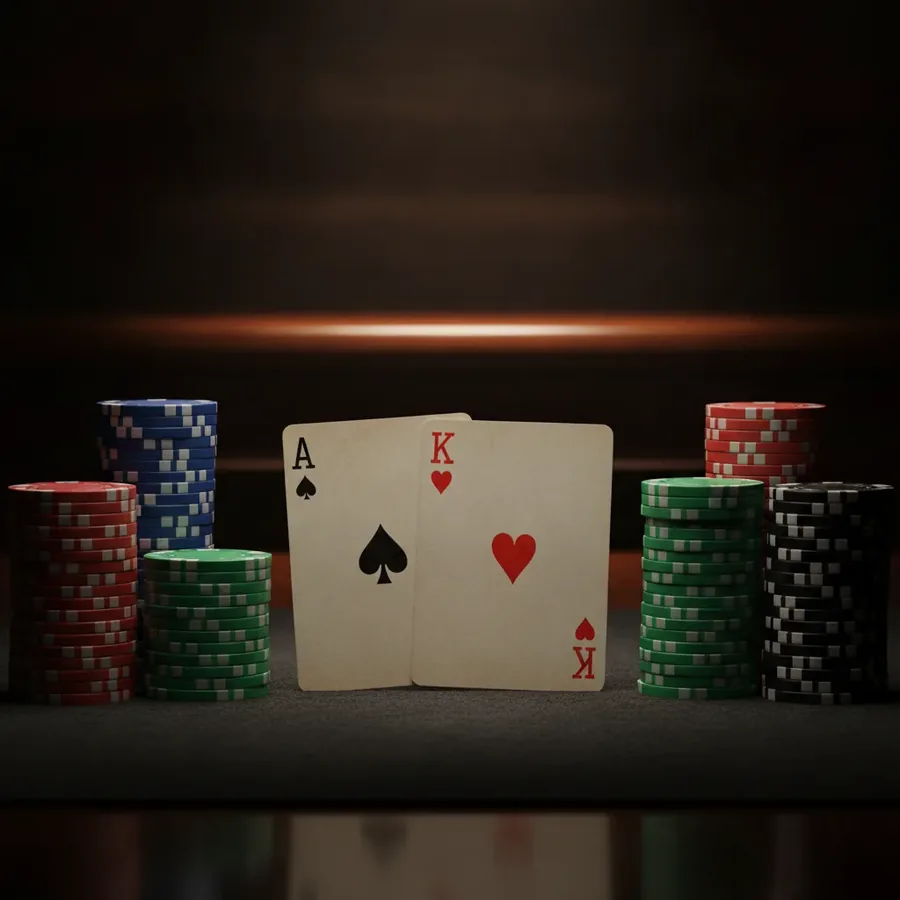
Perfect Pairs vs 21+3 in House Edge
The 21+3 side bet combines the player's first two cards with the dealer's upcard to form poker hands, contributing to the overall game statistics. Perfect Pairs operates as a separate wager focusing solely on whether the player's initial two cards match in rank or suit. Both bets function independently of the main blackjack hand outcome, requiring distinct strategic consideration from the participant.
Standard 21+3 payouts vary based on the resulting poker combination, with higher rewards for straights and flushes compared to simple pairs. Perfect Pairs typically offers fixed payouts for exact pairs versus suited pairs, creating a different risk distribution profile. Neither side bet influences the main game RTP directly but adds a layer of variance to the total expected loss per hour.
Side bets generally carry significantly higher house edges than the main blackjack game, which sits at approximately 0.46% under liberal rules. The 21+3 bet often exhibits a house edge exceeding 2%, making it less favorable for long-term bankroll preservation. Players should recognize these elevated costs when allocating portions of their stake toward auxiliary wagers.
When can you increase your bet?
Players may double their wager after receiving their initial two cards if they choose to execute the doubling action available in most variants. This option allows increasing the bet up to twice the original amount before drawing additional cards from the shoe. The timing is strictly limited to the decision phase prior to hitting or standing on the initial hand.
Some rule sets permit doubling after splitting pairs, expanding the opportunity to increase stakes beyond the initial deal. This feature requires careful analysis of the split hands against the dealer's upcard to ensure mathematical profitability. Not all tables allow this flexibility, so verifying the specific rules before playing remains essential for strategy implementation.
Increasing bets via doubling does not apply to subsequent hits taken after the initial double, restricting the escalation to one event per round. The maximum limit for any single bet remains capped at 5,000 EUR regardless of the doubling action performed. Understanding these constraints prevents invalid moves that could result in rejected wagers during live gameplay.
Unlimited seats via a split dealer hand
The Infinite Blackjack format utilizes a shared dealer hand that processes multiple player bets simultaneously through automated dealing procedures. This mechanism eliminates the need for individual dealer interactions with each seated participant, enabling unlimited concurrent connections. The visual interface displays all active bets relative to the single dealing sequence executed by the studio camera feed.
Standard tables distribute cards sequentially to each of the seven occupied seats, creating longer round durations compared to infinite variations. The split dealer approach accelerates gameplay by processing decisions in parallel rather than serially across physical positions. This efficiency gain supports higher volume play for users seeking rapid resolution of their wagering cycles.
Game speed improvements do not alter the underlying card probabilities or the 99.47% return percentage associated with the Evolution variant. Participants still face identical rule sets regarding soft 17 stands and doubling restrictions regardless of the seating capacity expansion. The structural change primarily affects time management rather than the fundamental mathematical expectations of the game.
Ace Split: only one card per hand
Resplitting Aces is a rule modification that improves the player's expected return by approximately 0.08 percentage points according to strategic calculations. This benefit applies specifically when the casino permits drawing only one additional card to each separated Ace hand. The restriction limits the potential value extraction from splitting low-value pairs compared to other card types.
Standard splitting rules allow up to four hands when pairing non-Ace cards, providing greater flexibility for constructing strong totals. The one-card limitation on Aces prevents the creation of multiple strong hands from a single pair, capping the strategic upside. This constraint balances the mathematical advantage gained from the ability to resplit initially.
Tables offering Resplit Aces alongside Double After Split (DAS) and Standing on Soft 17 (S17) achieve a house edge near 0.46%. The absence of resplitting capability would increase the casino's advantage, reducing the overall appeal for optimal strategy followers. Players must verify this specific rule inclusion to ensure they are engaging with the most favorable game conditions available.
Blackjack variants at a glance
| Variant | Payout | House edge | Rule | Bet range |
|---|---|---|---|---|
| Blackjack Split / Double / H17 – Regel-Effekte | n.a. (Regel-Modifikatoren) | H17 +0.22 Prozentpunkte; RSA −0.08 Prozentpunkte; DAS −0.14 Prozentpunkte | Dealer Hits Soft 17 verschlechtert RTP um 0.22 Prozentpunkte; Resplit Aces verbessert um 0.08 Prozentpunkte; Double After Split verbessert um ca. 0.14 Prozentpunkte; 6 Decks statt 8 – ca. 0.02 Prozentpunkte. | Double – Einsatz ×2 mit einer Karte; Split – bis 4 Hände; Ass-Split meist mit einer Karte. |
| Blackjack Ein Deck, klassische Regeln, 3:2 | 99.85% | 0.15% | Weniger Decks = niedrigerer Vorteil; ein Deck gibt ca. −0.48 Prozentpunkte gegenüber 8 Decks. Oft durch 6:5 Auszahlung kompensiert. | Blackjack 3:2, Gewinn 1:1 |
| Blackjack Liberal Vegas Strip (liberale Regeln, 3:2) | 99.72% | 0.28% | Günstigste Regelkombination: S17 + DAS + Resplit + Late Surrender. Standardabweichung 1,15 | Blackjack 3:2, Gewinn 1:1 |
| Blackjack 6 Decks, S17, DAS, DOA, Auszahlung 3:2, Basisstrategie | 99.54% | 0.46% | Dealer steht auf Soft 17; Verdopplung auf jeder Zweierkarte; Verdopplung nach Split erlaubt; keine Aufgabe. Basisstrategie ist für diesen Wert zwingend | Blackjack 3:2, normaler Gewinn 1:1, Insurance 2:1 |
| Blackjack Surrender (Late Surrender) – Regel-Effekt | n.a. (Regel-Modifikator) | −0.08 Prozentpunkte | Spieler gibt Hand nach Dealer-Blackjack-Prüfung auf, verliert die Hälfte des Einsatzes. Verbessert RTP um ca. 0.08 Prozentpunkte. Early Surrender ist wesentlich wertvoller (bis −0.6 Prozentpunkte), aber extrem selten. | Rückzahlung 50% des Einsatzes |
| Blackjack Auszahlung 6:5 statt 3:2 (6 Decks) | 98.15% | 1.85% | Ersatz von 3:2 durch 6:5 fügt exakt +1.39 Prozentpunkte zum Vorteil des Casinos hinzu – stärker als jede andere Regeländerung. Bei $10 Einsatz zahlt Blackjack $12 statt $15. | Blackjack 6:5, Gewinn 1:1 |
Bonus conditions often exclude Blackjack completely
The 300% welcome bonus up to €2,000 plus 100 free spins requires wagering on eligible games, but table games contribute only 10% toward the turnover requirement. Slots account for 100% of the wagering progress, making the bonus significantly harder to clear when playing card games instead of spinning reels. A player using the full €2,000 bonus must generate €80,000 in total turnover if relying solely on blackjack contributions rather than slot wagers. This 90% penalty drastically extends the time needed to unlock any potential withdrawal from the promotional funds.
Infinite Blackjack by Evolution offers an RTP of 99.47%, yet this high theoretical return does not help with the bonus clearance process at all. The game contributes a mere 10% to the wagering requirement, meaning every €100 bet counts as only €10 toward the target. In contrast, Lightning Blackjack by Evolution provides a slightly better RTP of 99.56%, but it suffers from the same restrictive 10% contribution rate for bonus turnover. Players seeking to utilize the welcome offer must therefore avoid these live tables entirely to meet the terms efficiently.
Continuous Shuffling Machine shuffles after each round
Blackjack Ein Deck features classic rules with a 3:2 payout and an RTP of 99.85%, resulting in a house edge of just 0.15%. Using fewer decks reduces the casino advantage by approximately 0.48 percentage points compared to standard eight-deck shoes, benefiting the player's long-term expectancy. However, this benefit is often offset by 6:5 payouts in some variants, which add 1.39 percentage points to the house edge instead. The continuous shuffling mechanism prevents card counting strategies that might otherwise exploit the single-deck composition during play sessions.
Split, Double Down, and Surrender in Numbers
The Liberal Vegas Strip variant allows resplitting aces and doubling after splits, improving the RTP to 99.72% against a house edge of 0.28%. Resplitting aces improves the player's position by 0.08 percentage points, while doubling after split adds another 0.14 percentage points to the expected value. Late surrender further enhances the odds by reducing the house edge by 0.08 percentage points, offering a crucial exit option for weak hands. These specific rule modifications combine to create one of the most favorable mathematical environments available in digital blackjack formats.
Live stream with three cameras and OCR
Quantum Blackjack Plus Live by Playtech features quantum multipliers reaching up to 1,000x on three-card combinations totaling 21 points within the live dealer interface. The game maintains an RTP of 99.57% when players employ optimal strategy, providing a high-return environment despite the volatile multiplier features. Bets range from €1 to €5,000, allowing both casual players and high rollers to participate in the enhanced winning opportunities. The integration of these multipliers adds a layer of excitement without altering the fundamental mathematical expectations of the base game.
Live Table vs RNG Table: Speed and Limits
Infinite Blackjack limits bets between €1 and €5,000, accommodating unlimited players at the table with four distinct side bets available for additional wagers. Lightning Blackjack restricts the maximum stake to €2,500 while offering lightning multipliers up to 25x on winning hands for added volatility. The RNG version with six decks, S17, DAS, and DOA rules yields an RTP of 99.54%, differing slightly from the live Infinite variant's 99.47%. Players choosing the live format must adapt to the slower pace of real dealers compared to the rapid execution of computer-generated outcomes.
How long does a Live Blackjack round take?
Infinite Blackjack, offered by Evolution, allows bets ranging from 1 to 5,000 EUR with an RTP of 99.47%. The table features unlimited seats for players and includes four distinct side bets such as Any Pair or Bust It. This structure supports high-volume play without the delays typical of traditional fixed-seat tables.
Lightning Blackjack, also from Evolution, accepts wagers between 1 and 2,500 EUR while delivering an RTP of 99.56%. Winners can receive multipliers up to 25x on successful hands during the lightning phase. The unlimited player capacity ensures that rounds proceed rapidly regardless of the number of participants at the virtual seat.
Quantum Blackjack Plus Live, provided by Playtech, accommodates stakes from 1 to 5,000 EUR with an optimal strategy RTP of 99.57%. Quantum multipliers apply to three-card combinations totaling 21 points, reaching values up to 1,000x. These high-value modifiers significantly impact potential returns within each specific round cycle.
No Double Down on three cards
The Liberal Vegas Strip variant permits doubling after splitting, known as DAS, which improves the RTP by approximately 0.14 percentage points. Players may double their bet using only one additional card after splitting pairs. This rule reduces the house edge to 0.28% when combined with other favorable conditions like S17.
Standard rules often restrict doubling to two cards total, whereas Liberal Vegas Strip allows DAS for better odds. A standard six-deck game with S17 and DAS offers an RTP of 99.54% compared to lower variants. Doubling increases risk but maximizes profit potential on strong starting hands like ten or eleven.
Resplitting Aces (RSA) further enhances player value by improving RTP by about 0.08 percentage points. This rule allows players to split aces again if they receive another ace, creating multiple opportunities to double down. Combining DAS and RSA with late surrender creates the most mathematically advantageous environment for beginners.
How many decks are in the shoe?
A single-deck game with classic rules and 3:2 payouts achieves an impressive RTP of 99.85% against a house edge of 0.15%. Fewer decks reduce the casino advantage by approximately 0.48 percentage points compared to eight-deck shoes. However, this benefit is often negated by inferior payout structures found in single-deck offerings.
Six-deck games typically offer an RTP of 99.54% when featuring S17, DAS, and DOA rules alongside 3:2 blackjack payouts. The house edge stands at 0.46%, requiring strict adherence to basic strategy to maintain these theoretical returns. Six decks provide a balance between deck penetration depth and manageable house advantage.
Eight-deck games generally present higher house edges unless paired with liberal rules like late surrender or DAS. The Infinite Blackjack live table uses multiple decks to ensure continuous shuffling and fair distribution across unlimited seats. Understanding deck count helps players select tables where the mathematical variance remains favorable over time.
Soft 17: Dealer Hits or Stands
When the dealer hits soft 17 (H17), the house edge increases by 0.22 percentage points compared to standing on soft 17 (S17). This rule change negatively impacts the overall RTP for all players at the table. Liberal Vegas Strip mandates S17, keeping the house edge low at 0.28% for experienced strategists.
S17 requires the dealer to stand on any hand totaling seventeen points, including those containing an ace valued as eleven. This constraint reduces the casino's winning probability by forcing the dealer to stop drawing cards earlier. Games like Liberal Vegas Strip utilize S17 to attract players seeking lower variance environments.
H17 forces the dealer to draw another card when holding a soft seventeen, increasing the bust rate slightly but also raising the final hand totals. The 0.22% penalty makes H17 tables significantly less profitable for players following basic strategy. Beginners should prioritize S17 tables to minimize the mathematical disadvantage inherent in every blackjack session.
Early Surrender is removed from many tables
Late surrender allows players to forfeit half their bet after the dealer checks for blackjack, improving RTP by approximately 0.08 percentage points. Early surrender, which permits quitting before the dealer checks, offers a much greater benefit of up to 0.6 percentage points. Most modern tables exclude early surrender due to its significant impact on house edge.
Liberal Vegas Strip includes late surrender, enabling players to save fifty percent of their wager against strong dealer up-cards. This rule modifier contributes to the variant's low 0.28% house edge when combined with S17 and DAS. Without late surrender, the house advantage increases, making the game less attractive for strategic players.
Insurance bets pay 2:1 but carry a high house edge of 7.47% for six to eight deck games, except when counting cards. While not a surrender rule, insurance decisions often intersect with surrender strategies in advanced play. Avoiding insurance and utilizing late surrender correctly represents the optimal approach for minimizing losses in standard blackjack scenarios.
Contact
Live - online chat
Banking









Providers












Duel Casino 2026